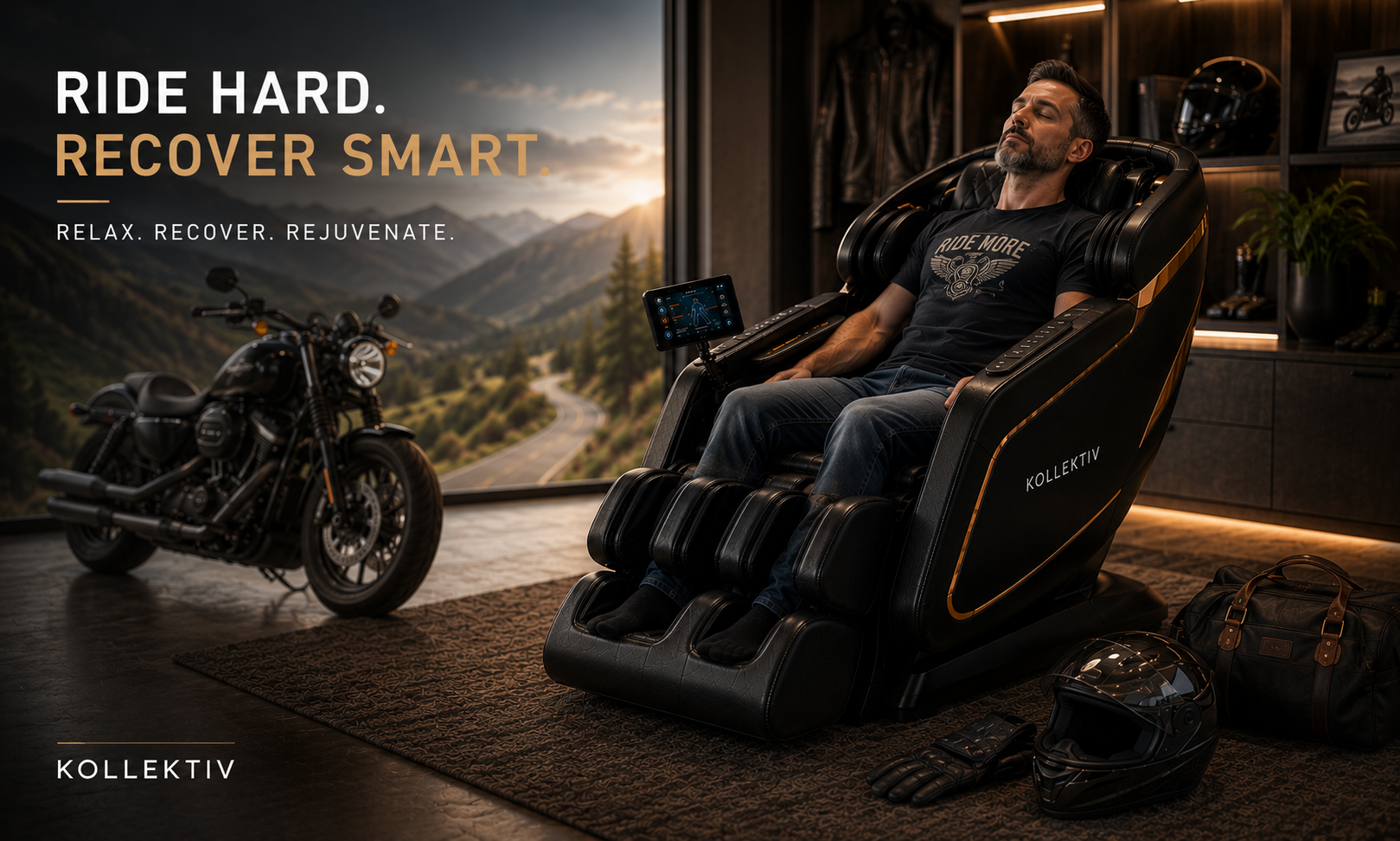
The best part of a long ride is the road. The part nobody posts about is the morning after.
Every August, roughly half a million riders point their bikes toward the Black Hills for the Sturgis Motorcycle Rally – a ten-day stretch of early starts, packed miles, and legendary runs like Iron Mountain Road, Needles Highway, and Spearfish Canyon. Plenty of those riders log a thousand miles or more just getting there. And whether your big trip is a rally week, a coast-to-coast run, or a weekend of twisties, the pattern is the same: the body keeps a tab, and it comes due when you finally climb off the bike.
This isn’t a rally recap or a packing list. It’s a practical look at why long-distance riding beats up your body, what real recovery involves, and where a massage chair fits into that routine – so your next ride starts from a place of “loose and ready” instead of “still sore from last time.”
Why Long Rides Leave You Sore
Riding looks relaxed from the outside. Physically, it’s sustained isometric work: you hold one forward-facing posture for hours while absorbing vibration, wind, and road feedback. That combination hits a predictable set of muscle groups.
Lower back. Across studies of riders, the lower back is the single most common complaint – riders report it more often, and more persistently, than any other area. Hours of supported sitting compress the lumbar spine and leave the surrounding muscles fatigued and tight.
Neck and shoulders. Your neck holds up your head plus the weight of a helmet, against constant wind pressure on the highway. That low, steady load adds up over a long day, which is why neck and upper-back tightness often shows up in the evening – or the next morning – rather than on the bike.
Grip, forearms, and shoulders. New or tense riders tend to grip the bars like a vise and clench through the arms and thighs. The tighter you hold on, the more of every bump and vibration your body absorbs instead of the suspension.
Hips, glutes, and hamstrings. Locked into the seat for hours, the posterior chain gets little movement and plenty of pressure – areas most people never stretch and standard recliners never reach.
Legs, calves, and ankles. Foot pegs, shifting, and braking keep your lower legs working in a fixed, cramped position for the whole ride.
Two things make it worse. First, vibration: the more tension you carry, the more road buzz your muscles soak up. Second, delayed onset – that “why do I feel like I got hit by a truck” stiffness that peaks a day or two after a big effort. Ride hard for several days in a row, as most riders do during a rally, and the fatigue stacks faster than your body can clear it.
The takeaway: post-ride soreness isn’t a character flaw or a sign you’re “too old to ride.” It’s the normal, physical cost of doing a demanding thing for a long time. Which means it responds to recovery.
What “Recovery” Actually Means for Riders
Recovery is simply helping your body clear the fatigue of one ride before the next one starts. For riders, three things do most of the work:
Decompression – taking load off the lumbar spine so the lower back can reset after hours of sitting.
Circulation – moving blood through muscles that have been locked in one position, which helps flush the byproducts of sustained effort.
Muscle release – easing the specific knots that build up in the back, neck, shoulders, hips, and legs.
None of this is exotic. Physical therapists and chiropractors have recommended the same core toolkit to riders for years: gentle stretching, heat to relax tight muscles, and massage to release tension and support circulation. Warmth in particular is a rider favorite – a warm compress on a stiff neck is old advice precisely because it works.
The catch is consistency. After a 500-mile day, the odds you’ll roll out a foam roller and run a 20-minute stretch routine are low. Recovery only helps if it actually happens – which is exactly the problem a massage chair is built to solve.
Where a Massage Chair Fits Into Rider Recovery
A massage chair isn’t a magic cure, and it doesn’t replace movement, hydration, or sleep. What it does is collapse the whole decompress-circulate-release routine into one thing you’ll actually do: sit down and press start. Here’s how the features map onto the exact areas riding punishes.
What riding does to you
What helps
Chair feature that delivers it
Compresses the lumbar spine
Take load off the lower back
Zero-gravity recline that elevates the legs and offloads the spine
Tight, fatigued back muscles
Reach the full length of the spine
SL / dual-track rollers running neck to lower back and glutes
Neck and shoulder strain from helmet + wind
Targeted release up top
Neck and shoulder rollers, adjustable intensity
Locked hips, glutes, hamstrings
Open and lengthen the posterior chain
Thai / yoga stretch programs and L-track coverage
Fatigued calves, feet, and ankles
Circulation and release below the knee
Calf and foot rollers, air compression
Muscles that won’t let go
Warmth to relax tissue
Lumbar and calf heat therapy
The reason full-body coverage matters for riders specifically is the posterior chain. Grabbing afull-body massage chair with an extended track reaches the glutes and hamstrings – the exact areas that get crushed in the saddle and ignored by an ordinary recliner. Pair that with a zero-gravity position, which reclines you until your legs sit above your heart and the weight comes off your lumbar spine, and you’ve addressed the rider’s number-one complaint in a single setting.
You don’t need a sports-science degree. You need something short enough to repeat after every long day. Here’s a rider-friendly version built around a4D massage chair session.
Move first (2 minutes). Before you sit, do a few slow neck circles, standing spinal twists, and a gentle forward fold to wake up the back and hips. Motion before massage.
Recline into zero gravity. Let the chair take you back until your knees are level with or above your chest. Give it a minute – this is where the lower back starts to decompress.
Run a full-body program (12–15 minutes). Let the rollers work the length of your spine, then let the stretch program open your hips and shoulders. Add heat to the lumbar zone if your chair has it.
Finish with the legs. Turn attention to the calf and foot rollers. After a day on the pegs, this is the part most riders don’t want to skip.
Hydrate and rest. Massage supports circulation; water and sleep finish the job.
Keep the intensity honest. More pressure isn’t automatically better, and a session that leaves you bruised isn’t recovery. If a program ever feels punishing, it’s easy todial the pressure in so it feels good instead of brutal– start gentler than you think you need, especially on already-sore muscles.
Choosing the Right Massage Chair as a Rider
Riders aren’t one size, and neither are the chairs. Use your body, your budget, and your biggest problem area to narrow it down.
If you’re a rider who…
Prioritize
Worth a look
Runs tall or big (6’2″+)
Extended track length and a high height/weight range
A few rider-specific notes on fit. Height and weight range matter more for riders than for the average buyer, because the people drawn to long-haul cruisers often sit at the taller, heavier end of the range – look for chairs rated to around 6’5″ and higher weight capacities. Track length is the recovery spec that counts, since a longer track is what actually reaches the glutes and hamstrings that riding beats up. And if you’re still deciding whether a chair earns its place at all, it helps to seewho benefits most from a massage chair before you commit.
It’s Not Just the Rider
Here’s a detail rally organizers have tracked for years: a growing share of attendees don’t even own a bike – passengers, partners, and friends who come for the ride and the atmosphere. Long days two-up, on the back of a cruiser or packed into a chase vehicle, produce the same locked-posture fatigue as riding itself.
That’s the quiet case for keeping recovery at home rather than chasing it on the road. A chair in the living room serves the rider and everyone who traveled with them – and it keeps working the other fifty weeks of the year, long after the rally photos are posted. Recovery you own beats recovery you have to go find.
9. FAQ Section
Is a massage chair good for motorcycle riders?
Yes. Riders most often deal with lower-back, neck, shoulder, and leg fatigue from long hours in a fixed posture, and a full-body massage chair targets those exact areas with roller massage, zero-gravity decompression, stretch programs, and heat. It won’t replace movement, sleep, or hydration, but it makes consistent post-ride recovery far easier to actually do.
What’s the best massage chair for long-distance riding recovery?
Look for three things: a long SL or dual track that reaches the glutes and hamstrings, a zero-gravity recline to take load off the lower back, and lumbar heat. Taller or heavier riders should also check the height and weight rating. A flagship model covers everything at once, while budget-friendly 4D chairs still deliver the core recovery features.
How does a massage chair help with motorcycle back pain?
Long rides compress the lumbar spine and fatigue the surrounding muscles. Reclining into zero gravity offloads the spine, full-length rollers release the tight muscles along the back, and heat helps the tissue relax – the same decompress-and-release approach therapists recommend for riders, in a form you’ll use every day.
How often should a rider use a massage chair?
Most automatic programs run 12–20 minutes, which is usually enough. A short session after each long ride, plus a few maintenance sessions a week, is a sensible rhythm for most people. Keep the pressure comfortable rather than punishing, and check with a healthcare professional if you have a specific condition.
Do I need a massage chair if I already have a massage gun and a foam roller?
They’re not the same job. A gun is spot treatment, a roller is floor-based self-massage, and a chair delivers hands-free, full-body coverage you’ll reach for after a hard day when you don’t feel like working for it. Many riders end up using all three for different situations.
Are massage chairs only worth it during rally season?
No – the seasonal timing is just a good reminder. The fatigue from long rides is year-round, and a chair keeps earning its place through every season and every trip, not only in August.
10. Conclusion
The ride is the reward. The recovery is what lets you keep collecting it – season after season, mile after mile, without your body filing a complaint every morning after a big day. Long-distance riding will always ask a lot of your back, neck, and legs; the smart move is having a way to give it back.
A massage chair turns recovery from a chore you skip into a habit you look forward to. When you’re ready to build that into your routine,browse the full Kollecktiv massage chair collection and match a chair to how – and how far – you ride.