🎉Fall Sale - Limited Stocks!
🥇 America’s Top-Rated Massage Chair Brand
🚚 Free Fast U.S. Shipping
🎁 3 Year Warranty + No Sales Tax
🎖️ Exclusive Military Massage Chair Discount
🎉Fall Sale - Limited Stocks!
🥇 America’s Top-Rated Massage Chair Brand
🚚 Free Fast U.S. Shipping
🎁 3 Year Warranty + No Sales Tax
🎖️ Exclusive Military Massage Chair Discount
🎉Fall Sale - Limited Stocks!
🥇 America’s Top-Rated Massage Chair Brand
🚚 Free Fast U.S. Shipping
🎁 3 Year Warranty + No Sales Tax
🎖️ Exclusive Military Massage Chair Discount
🎉Fall Sale - Limited Stocks!
🥇 America’s Top-Rated Massage Chair Brand
🚚 Free Fast U.S. Shipping
🎁 3 Year Warranty + No Sales Tax
🎖️ Exclusive Military Massage Chair Discount
Most massage chair content answers the question “which chair should I buy?” before answering the more fundamental one: “is a massage chair actually right for my situation?”
Those are different questions, and the second one matters more. The best chair in the world delivers little value if it’s being used for the wrong reasons or by someone whose condition warrants a different approach. This guide works through the use cases where massage chairs genuinely shine, situations where they’re helpful with some nuance, and the cases where a conversation with a healthcare provider should come first.
What Does a Massage Chair Actually Do?
Before mapping use cases, it’s worth being clear about what a massage chair’s mechanical action produces, because that determines who benefits:
Roller pressure along the spine and surrounding musculature increases local blood flow and reduces muscle tension in the paraspinal muscles
Airbag compression on the limbs, shoulders, and hips creates rhythmic squeeze-and-release cycles that support lymphatic circulation and reduce peripheral stiffness
Zero gravity recline distributes body weight more evenly across the back, reducing compressive load on the lumbar discs and lower spine
Heating elements on the lumbar and calf areas increase local tissue temperature, which reduces muscle viscosity and makes the subsequent massage more effective at depth
SL-track roller coverage from the neck through the glutes addresses the full posterior chain, not just the middle back
These are mechanical and thermal inputs. They are not medical treatments, and a massage chair is not a substitute for clinical care. But for the right users and the right conditions, they’re genuinely effective inputs that most people’s daily routines are entirely missing.
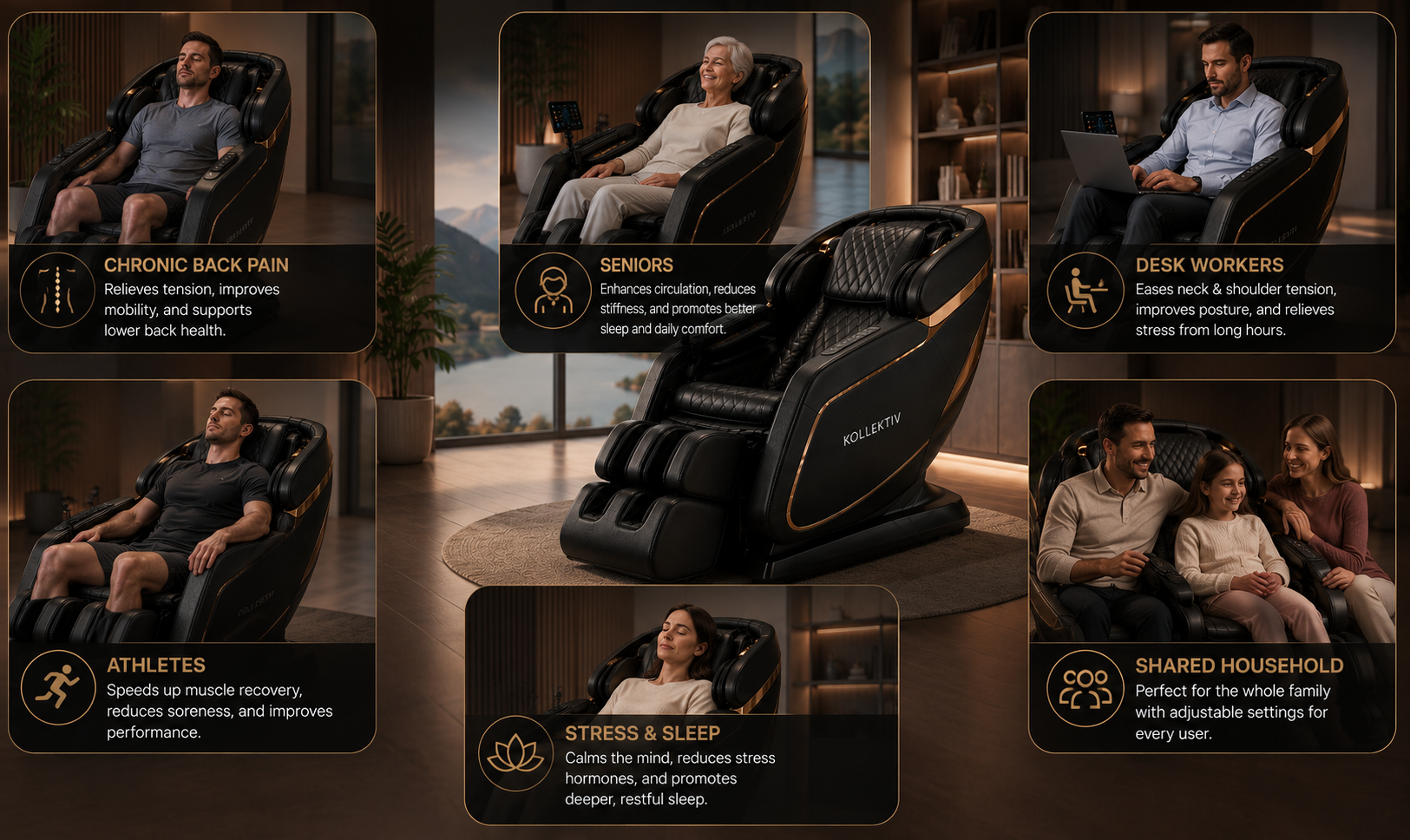
Massage Chairs for Chronic Back Pain
This is the most common reason people consider a massage chair, and it’s also the use case with the most useful nuance.
For tension-based back pain – the kind that accumulates from prolonged sitting, poor posture, or muscular overuse – a massage chair provides direct, repeatable relief that’s difficult to replicate through any other home tool. The combination of roller pressure along the paraspinal muscles, zero gravity decompression, and lumbar heat addresses the three most common mechanical contributors to everyday back pain simultaneously and in one session.
The distinction worth understanding is between muscular back pain and structural back pain. If the pain is primarily in the muscles and soft tissue surrounding the spine, a massage chair is well-suited to daily management. If the pain originates from disc herniation, spinal stenosis, or nerve compression, consult a chiropractor or physician before using a massage chair regularly – not because chairs are inherently dangerous in these cases, but because certain positions and pressure levels may need to be adjusted for specific conditions.
For muscular back pain, the features that matter most are the roller track type and lumbar heat.4D massage chairswith extended SL tracks are particularly effective because the rollers follow the natural curve of the spine and continue through the glutes and upper hamstrings – an area that contributes significantly to lower back tension but is missed entirely by shorter S-track designs.
Massage Chairs for Seniors
Older adults are among the most consistent beneficiaries of regular massage chair use, and the reasons are practical rather than indulgent.
Circulation naturally declines with age. Peripheral stiffness in the hands, feet, and legs becomes more pronounced. Sleep quality decreases. Recovery from minor physical activity takes longer than it used to. A massage chair addresses several of these simultaneously: the airbag compression on the calves and feet stimulates circulation where it’s most commonly reduced; the zero gravity position reduces joint load during the session; the heating elements ease the muscular stiffness that tends to be worst in the morning.
A few practical considerations apply specifically to older users. Intensity should start low and increase gradually – most current chairs offer five levels of roller pressure and airbag intensity. Sessions of 15 to 20 minutes are typically more appropriate than extended use. And ease of operation matters more than it does for younger buyers: voice control and shortcut panels, available across the Kollecktiv range, make the chair accessible without requiring touchscreen navigation.
Seniors with osteoporosis, recent fractures, or joint replacements should consult their physician before using a massage chair, as roller pressure and airbag compression near specific sites may need to be avoided. For the majority of older adults without these conditions, afull-body massage chairused a few times a week provides a meaningful contribution to mobility, sleep quality, and daily comfort.
Massage Chairs for Desk Workers and Remote Professionals
This is the fastest-growing residential use case in the massage chair market, and the reasons are straightforward: the physical toll of sustained desk work is both well-documented and largely unaddressed by standard home office setups.
Sitting for 7 to 9 hours a day compresses the lumbar discs, tightens the hip flexors, shortens the chest and shoulder muscles, and creates chronic tension in the upper trapezius – the muscle group across the top of the shoulders that carries most of the strain from neck-forward posture. A standing desk addresses some of this. Regular breaks help. But neither decompresses the lumbar spine or addresses the full posterior chain the way 20 minutes in a zero gravity massage chair does.
For desk workers, the timing of massage chair use tends to matter as much as the chair itself. End-of-workday sessions are particularly effective because they interrupt the cycle of tension accumulating through the week. Many remote workers report that regular evening sessions reduce the headaches and shoulder stiffness that previously built up by Thursday and Friday.
The features most relevant for this use case are lumbar and neck roller coverage, heating, and zero gravity recline. Models in the$2,001–$3,000 range offer this combination well, while theKollecktiv 301 adds deep yoga stretching and AI body sensing for users who want the full decompression effect after long working days.
Massage Chairs for Athletes and Active Recovery
Massage chairs occupy a specific and useful niche in athletic recovery – but it helps to be precise about what they do well versus where targeted professional treatment remains the better option.
Where they excel: general recovery from training load, reducing delayed onset muscle soreness (DOMS) in the back, glutes, and hamstrings, maintaining tissue quality during periods of high training volume, and managing the lower back and hip tension that accumulates in weightlifters, runners, and cyclists. The SL-track coverage from the neck through the glutes covers most of the posterior chain that bears the brunt of most training.
Where they have limits: acute injuries, muscle tears, and joint inflammation should not be massaged. The compression and roller pressure that is therapeutic for tight, healthy muscle tissue can aggravate inflamed tissue. Athletes recovering from injury should follow their physiotherapist’s guidance on when to reintroduce massage.
For athletes using a massage chair as part of a regular recovery routine, the yoga stretching feature on theKollecktiv 301 flagshipis particularly relevant. It addresses hip flexor and thoracic extension mobility that most training modalities tighten – an area where a massage chair contributes something foam rolling and massage guns handle less comprehensively.
Massage Chairs for Stress and Sleep
This is arguably the most underrated use case for a residential massage chair, and the one where consistent daily use produces the most noticeable cumulative benefit over time.
The physiological mechanism is well-established: mechanical massage stimulates the parasympathetic nervous system and reduces circulating cortisol. The zero gravity position reduces cardiac preload and promotes the same physiological state associated with rest. The combination of pressure, warmth, and rhythmic compression is one of the most effective non-pharmacological methods of shifting the nervous system from a stress-activated state to a recovery state.
For people with elevated baseline stress, chronic sleep difficulty, or anxiety that manifests physically as muscle tension and restlessness, regular massage chair use – particularly in the evening – can meaningfully improve both the ease of falling asleep and reported sleep quality. This isn’t a remarkable claim; it’s a predictable result of reducing cortisol and muscle tension before bed.
The G12 model’s SonicWave technology, which synchronizes the massage rhythm with music, is particularly well-suited to stress and sleep applications. It adds an auditory dimension that deepens the parasympathetic response for many users. For anyone whose primary motivation is stress relief and sleep quality rather than back pain or athletic recovery, this is worth comparing alongside the rest of themassage chair range.
Massage Chairs for Shared Household Use
A practical use case that often gets missed in individually-focused buying guides: households where multiple people with different needs, heights, and preferences will share the same chair.
Modern massage chairs handle multi-user households better than most buyers expect. Body scan technology re-calibrates to each user’s shoulder position at the start of every session. Adjustable footrests accommodate different leg lengths. Five-level intensity adjustment means one person’s preference for deep-tissue pressure doesn’t have to be anyone else’s experience. Voice control makes the chair accessible to all ages without requiring anyone to navigate a touchscreen.
User Type
Primary Benefit
Key Features to Prioritise
Chronic back pain
Lumbar decompression, muscle tension relief
SL track, lumbar heat, zero gravity recline
Seniors
Circulation, joint load reduction, sleep
Gentle intensity, voice control, heat therapy
Desk workers
Postural reset, neck and upper back relief
Neck/shoulder coverage, lumbar heat, zero gravity
Athletes
Posterior chain recovery, DOMS reduction
Full SL track, yoga stretch, deep pressure range
Stress & sleep
Cortisol reduction, parasympathetic activation
Zero gravity, rhythmic programs, evening use
Shared household
Multi-user adaptability
Body scan, adjustable footrest, voice control
Who Should Exercise Caution
A massage chair is not appropriate for everyone without qualification. The following groups should consult a healthcare provider before regular use:
• People with blood clots or deep vein thrombosis (DVT): airbag compression on the legs can be contraindicated
• People with recent surgical implants near the spine or limbs: roller and airbag pressure near implant sites should be cleared by the treating surgeon
• People with active inflammatory conditions affecting the spine or joints: massage during a flare can aggravate rather than relieve symptoms
• Pregnant women, particularly in the first trimester and for any programs involving abdominal or lower back pressure
• People with severe osteoporosis: roller pressure on the vertebrae carries fracture risk in advanced cases
For the broad majority of adults without these specific conditions, a massage chair is both safe and beneficial with regular use. Oureducation section covers how often to use a massage chair and what to expect from the first few weeks of ownership, which is useful context alongside this guide.
Matching Your Use Case to the Right Chair
Once you’ve identified your primary use case, the next step is matching it to the right tier and feature set. Ourbuying guide section covers how to evaluate chairs by mechanism and specification. For users whose primary need is back pain or athletic recovery, theluxury massage chair rangeoffers the most comprehensive SL-track and deep-pressure options. For households managing a budget alongside versatility, models in theunder $2,000 category still deliver the core feature set – 4D rollers, SL track, zero gravity, heat – that covers all six use cases above at the entry level. And if you’re comparing specific models directly, thecomparison guides make that evaluation straightforward.
FAQ
Is a massage chair good for chronic back pain?
For tension-based and muscular back pain, yes. A massage chair with an SL-track roller system, lumbar heat, and zero gravity recline addresses the three main mechanical contributors to everyday lower back pain in a single session. For structural conditions such as disc herniation or spinal stenosis, consult a physician before regular use, as the intensity and position may need to be adjusted for your specific situation.
Can seniors use a massage chair every day?
Most seniors can use a massage chair daily with appropriate intensity settings. Sessions of 15 to 20 minutes at low to medium intensity are typically well-tolerated. Seniors with osteoporosis, recent fractures, or joint replacements should consult their doctor before starting. Voice control and shortcut panels make modern massage chairs genuinely accessible without requiring touchscreen navigation.
Is a massage chair good for stress and sleep problems?
Yes. The combination of mechanical massage, zero gravity recline, and rhythmic airbag compression stimulates the parasympathetic nervous system and reduces cortisol. Regular evening use in particular can meaningfully improve both sleep onset and sleep quality. This is one of the most consistently reported benefits among everyday massage chair owners.
Can you use a massage chair after a workout?
Yes, for general muscle recovery and DOMS reduction, post-training use is effective. Avoid using a massage chair immediately after an acute injury, during a flare of an inflammatory condition, or over areas of bruising or muscle tears. For healthy training recovery, 20 to 30 minutes focusing on the back, glutes, and hamstrings is a useful addition to a regular recovery routine.
How often should you use a massage chair?
Two to three times per week is the recommended baseline for general wellness and stress management. For active back pain management or athletic recovery during high-training periods, daily use in 15 to 20 minute sessions is appropriate for most users. Sessions longer than 30 minutes don’t provide proportionally more benefit and can cause temporary soreness if the tissue isn’t accustomed to the pressure level.
Are there people who should not use a massage chair?
Yes. People with blood clots or DVT, active inflammatory joint conditions, recent surgical implants near the spine or limbs, advanced osteoporosis, or who are in the first trimester of pregnancy should consult a healthcare provider before use. For the majority of adults without these specific conditions, massage chairs are safe and beneficial with regular use.
Conclusion
A massage chair isn’t a universal prescription, and the people who get the most from them are typically those who bought with a clear use case in mind rather than a general sense that relaxation would be nice. Whether the primary driver is managing lower back tension from desk work, supporting recovery between training sessions, improving sleep quality, or giving an older family member better daily mobility – the use case shapes which features matter, how often the chair gets used, and whether the investment pays off in the long run. If you’ve worked out which category fits your situation, the next step is straightforward: browse thefull massage chair rangewith your primary use case in mind, or read through thebuying guide section for guidance on which specifications actually matter for your needs. Every Kollecktiv chair comes with a 40-day trial period, which means you can test your reasoning against reality once the chair is actually in your home.