🔥 Black Friday Prices Now! 90-Day Price Match Guarantee.
✨ FREE White Glove Delivery - Only at Kollecktiv
🥇 America’s Top-Rated Massage Chair Brand
🎉Pre-Black Friday Sale - Limited Stocks!
🚚 Fast U.S. Shipping, arrives in 3+ days
🎁 No Sales Tax & 3 Year Warranty
🎖️ Exclusive Military Massage Chair Discount
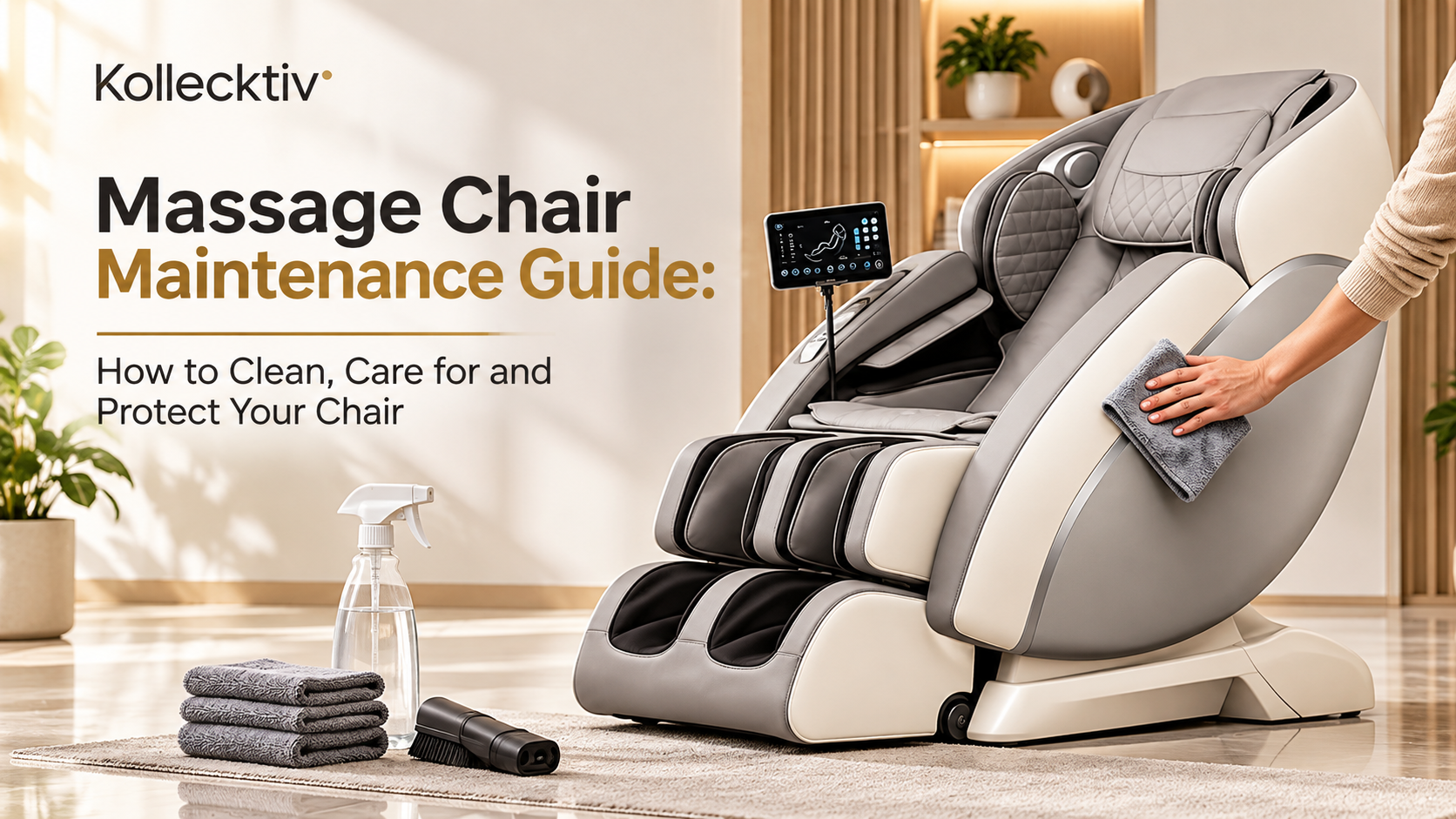
Quick Answer: massage chair maintenance is mostly simple, regular care. Unplug the chair before cleaning, vacuum seams and foot wells, and wipe the upholstery with a barely damp soft cloth and a little mild soap, then dry it. Keep the chair out of direct sun and away from moisture, stay within its weight limit, and check the cord and controls now and then. Leave anything inside the chair to qualified service: if you hear new noises or a function stops working, stop and contact the manufacturer. Always follow your owner’s manual first.
A massage chair is part furniture and part machine. The furniture side needs gentle cleaning; the machine side needs you to notice changes early and leave repairs to the professionals. Good habits take a few minutes a week, and they’re one of the factors behind how long a massage chair realistically lasts.
This guide covers general care that applies to most home massage chairs. Your owner’s manual is the authority for your model, so if it says something different, follow the manual.
Why Regular Maintenance Matters
Upholstery lasts longer. Sweat, skin oils, dust and sunlight are what wear synthetic leather down, and regular cleaning removes most of them.
Problems get caught early. A quick look at the cord, seams and controls helps you spot changes before they get worse.
It protects your warranty position. Following the manual and avoiding unauthorized repairs keeps you within the terms most warranties set.
It keeps a shared chair pleasant. In a family chair, regular wipe-downs matter for comfort and hygiene.
Routine Care vs Repairs: Know the Line
You can do this
Leave this to qualified service
Wiping and vacuuming outside surfaces
Opening panels or covers to reach motors, wiring or the roller track
Cleaning controls with a dry or barely damp cloth
Lubricating or adjusting internal mechanisms
Checking the cord and plug for visible damage
Replacing cords, switches, airbags or electronic parts
Removable covers or liners, if your manual allows
Anything that needs tools inside the frame
Power-cycling the chair per the manual
Bypassing safety stops or forcing a stuck mechanism
How to Clean a Massage Chair Safely
Before You Start
Switch off, unplug and return the chair upright. Never clean a running or plugged-in chair, and don’t handle the plug with wet hands.
Check the manual for your upholstery type and any approved cleaners. Many chairs in this class use PU (polyurethane) synthetic leather, but confirm yours.
Test any cleaner on a small hidden spot first.
You’ll need: soft microfiber cloths, warm water, a small amount of mild pH-neutral soap, a vacuum with a soft brush attachment, and a dry towel.
Step 1: Dust and Vacuum
Use the soft brush attachment along seams, folds, the gap between seat and backrest, and the foot wells, where crumbs, hair and pet fur collect. Go gently around stitching. If your chair has rear wheels (most Kollecktiv models list two), follow the manual’s instructions before rolling it out to clean the floor beneath.
Step 2: Wipe the Upholstery
Dampen a cloth with warm water and a drop of mild soap, then wring it until it’s barely damp. Wipe one panel at a time with light pressure, starting with the headrest, shoulders and armrests, where oils build up most. Never spray anything directly onto the chair; liquid can run into seams and openings near airbags, wiring and the roller track.
Step 3: Rinse and Dry
Wipe again with a cloth dampened with plain water to lift soap residue, then dry right away with a towel.
Step 4: Foot Wells, Calf Rests and Airbag Areas
Vacuum first, then wipe reachable surfaces with a barely damp cloth. If liners or covers are removable, follow the manual for washing. Don’t push water into roller or airbag areas, and don’t pry covers open to reach inside.
Step 5: Touchscreen, Remote and Shortcut Panel
Use a dry or very lightly damp cloth. Never use liquid cleaners on screens or buttons.
Step 6: Let It Dry Fully
Leave the chair unplugged until everything is completely dry.
What Not to Use
Avoid
Why
Alcohol-based cleaners and many disinfecting wipes
Can dry out and crack synthetic leather
Bleach, ammonia, solvents
Can discolor and break down upholstery
Steam cleaners, soaking or sprays
Push moisture into seams, foam and electrical parts
Abrasive pads or stiff brushes
Scratch surfaces and wear through coatings
Household oils or unapproved conditioners
PU is a coated synthetic, not hide; some products don’t suit it
Lubricants near the track or mechanism
Internal parts are for qualified service only
A Simple Massage Chair Maintenance Schedule
When
What to do
After use (as needed)
Quick dry wipe of the headrest, shoulders and armrests, especially after a workout
Weekly
Vacuum seams and foot wells; wipe high-contact areas with a barely damp cloth; dust the area around the chair
Monthly
Full wipe-down, rinse and dry; check seams for wear; look over the power cord and plug; wipe the controls
Every few months
Review placement (sun, heat, moisture, wall clearance); apply an approved protectant if your manual allows one; reread the manual’s care section
Shared chairs, homes with pets, and daily use may call for the weekly routine more often.
Protect the Chair’s Surroundings
Sunlight and heat: keep the chair out of direct sun and away from heaters, fireplaces and vents.
Moisture: avoid bathrooms, damp basements and spots near open windows.
Level floor: a stable, level surface helps the recline and leg rest move as designed.
Clearance: leave the wall clearance your model specifies so the recline never presses into a wall or furniture.
Pets and children: keep claws, toys and small hands away from moving parts, and keep children off a running chair.
Spills: keep drinks away; if one happens, unplug, blot (don’t rub) and dry.
Check the Power Cord and Visible Parts
Once a month, with the chair unplugged, look over:
Make sure nothing is caught in the chair or under the recline; check the floor is level
Grinding, scraping, burning smells, or a noise that keeps getting worse
Rollers behave differently
Let the program finish; power-cycle per the manual; run a short auto program
Rollers stall, jerk or press unevenly after a restart
Airbags don’t inflate
Confirm the program uses air compression and that intensity isn’t set to off or minimum
One side stays flat or you hear air leaking
Foot or calf area not working
Check the leg rest isn’t blocked and the function is turned on
It still doesn’t move, or makes unusual sounds
Remote or touchscreen unresponsive
Power-cycle the chair; check the controller cable is seated
The screen stays frozen or shows error messages
No power
Check the plug, outlet and any power switch on the chair
The outlet works but the chair is dead, or the cord is damaged
Never open electrical components, bypass safety stops or force a stuck mechanism. Doing so can be unsafe and can turn a covered repair into an excluded one.
Habits That May Help Extend Your Chair’s Useful Life
Follow the usage guidance in your manual for session length and programs.
Respect the weight limit. Kollecktiv’s current models list capacities of about 330 to 350 pounds depending on model; stay within yours, and don’t let two people share the chair at once.
Don’t stand or sit on the leg rest or armrests.
Let programs finish instead of switching off mid-cycle where possible.
Act on changes early. A new sound or behavior is cheaper to address sooner.
How long a chair lasts depends on the model, how often it’s used, how it’s cared for, and where it’s kept, so no care routine can promise a specific number of years.
Understanding Your Warranty and Support
Knowing your coverage before something goes wrong saves time. Here’s what Kollecktiv’s warranty policy states:
Coverage:Kollecktiv’s 3-year parts and labor warranty applies to most models, with 6 years on the 301 flagship. It covers defects in materials and workmanship from the date of purchase.
Claims: contact customer service with proof of purchase and a description of the issue. Support will troubleshoot with you, and repairs or replacements must be authorized in advance.
Limits: the warranty isn’t transferable, is valid in the continental United States, and doesn’t cover chairs bought from unauthorized resellers.
Exclusions: damage from improper installation, not following operating instructions, unauthorized repairs or modifications, power supply issues, transportation, or rust, corrosion, sand, dirt or natural disaster. Foam softening, fabric fading or pilling, and natural marks in leather are treated as normal rather than defects.
In practice: keep your receipt and order confirmation, follow the manual’s cleaning method, and contact Kollecktiv’s support team before attempting anything beyond routine care. Kollecktiv lists live chat on working days and email replies within 12 hours.
Maintenance Mistakes to Avoid
Cleaning a chair that’s still plugged in.
Spraying cleaner directly onto upholstery or controls.
Using alcohol wipes, bleach or household oils.
Opening panels or lubricating internal parts yourself.
Ignoring a new noise or a function that stops working.
Placing the chair in direct sun, near heat, or in a damp room.
Exceeding the weight limit or letting children play on it.
Throwing away proof of purchase.
Shopping for a Chair? Factor In Upkeep
If you’re still choosing a chair, think about how it will look and live after a year, not just on delivery day. Light finishes look fresh in bright rooms but show marks sooner; darker finishes hide everyday wear. Several models come in more than one finish, including the Kollecktiv G18 in ivory or black, the 208 in brown or black and the 205 in black or white. You can compare finishes and features across the lineup or start with Kollecktiv’s 4D and 5D massage chairs.
Frequently Asked Questions
How often should you clean a massage chair?
Wipe high-contact areas after use or weekly, vacuum seams and foot wells weekly, and do a full careful clean monthly. Daily or shared use may call for more.
Can you use disinfecting wipes on a massage chair?
Many contain alcohol or other chemicals that can dry out synthetic leather. Use them only if your manual approves them; otherwise use a barely damp cloth with mild soap.
How do you clean PU leather on a massage chair?
Wipe with a soft cloth barely damp with warm water and mild soap, rinse with a plain damp cloth, and dry immediately.
Does a massage chair need professional servicing?
Routine care is something owners can do. If you notice new noises, uneven movement or a function that stops working, contact the manufacturer rather than servicing it yourself.
Why is my massage chair making a new noise?
Check that nothing is caught in the chair or under the recline and that the floor is level. If the noise continues, worsens, or sounds like grinding, stop using the chair and contact support.
Can cleaning affect my warranty?
It can if it causes damage. Kollecktiv’s warranty excludes damage from not following operating instructions and from unauthorized repairs, so follow the manual and ask support before trying anything new.
Final Maintenance Recommendations
Keep it simple and consistent: unplug, vacuum, wipe gently, dry, and protect the chair from sun, moisture and overloading. Check the cord and controls monthly, act on changes early, and leave internal work to qualified service. Keep your proof of purchase handy and follow your manual, and you’ll protect both the chair and your coverage.
This guide offers general care information. Your owner’s manual takes priority for your specific model.