✨ FREE White Glove Delivery - Only at Kollecktiv
🥇 America’s Top-Rated Massage Chair Brand
🎉Fall Sale - Limited Stocks!
🚚 Fast U.S. Shipping, arrives in 3+ days
🎁 No Sales Tax & 3 Year Warranty
🎖️ Exclusive Military Massage Chair Discount
🔥 Black Friday Prices Now! 90-Day Price Protection.
✨ FREE White Glove Delivery - Only at Kollecktiv
🥇 America’s Top-Rated Massage Chair Brand
🎉Fall Sale - Limited Stocks!
🚚 Fast U.S. Shipping, arrives in 3+ days
🎁 No Sales Tax & 3 Year Warranty
🎖️ Exclusive Military Massage Chair Discount
🔥 Black Friday Prices Now! 90-Day Price Protection.
✨ FREE White Glove Delivery - Only at Kollecktiv
🥇 America’s Top-Rated Massage Chair Brand
🎉Fall Sale - Limited Stocks!
🚚 Fast U.S. Shipping, arrives in 3+ days
🎁 No Sales Tax & 3 Year Warranty
🎖️ Exclusive Military Massage Chair Discount
🔥 Black Friday Prices Now! 90-Day Price Protection.
✨ FREE White Glove Delivery - Only at Kollecktiv
🥇 America’s Top-Rated Massage Chair Brand
🎉Fall Sale - Limited Stocks!
🚚 Fast U.S. Shipping, arrives in 3+ days
🎁 No Sales Tax & 3 Year Warranty
🎖️ Exclusive Military Massage Chair Discount
🔥 Black Friday Prices Now! 90-Day Price Protection.
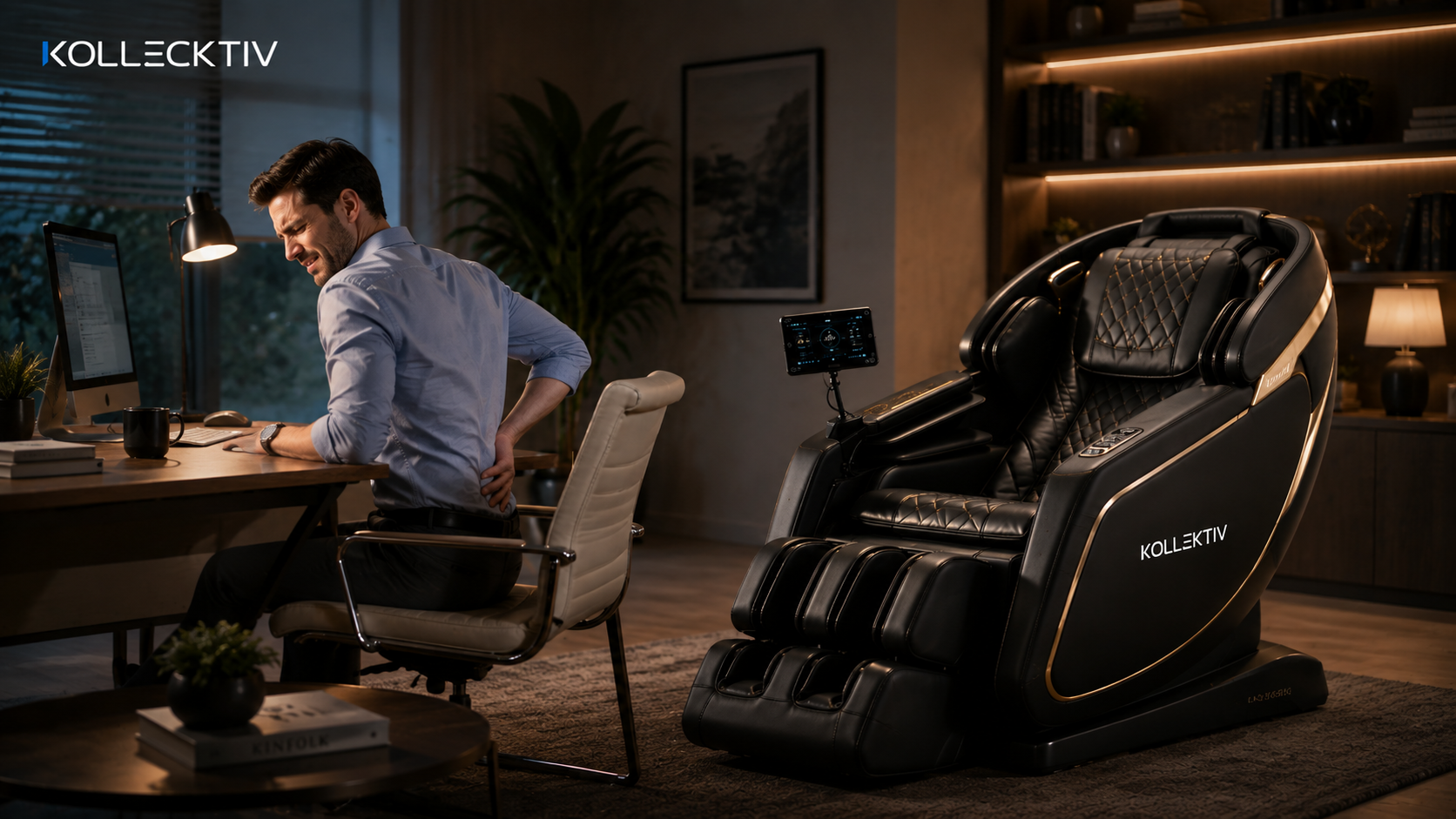
If your lower back feels tight when you stand up from your desk, aches by mid-afternoon, or stiffens after a long drive, you’re experiencing one of the most common complaints of modern life. The good news: back pain from sitting all day is often tied to habits you can adjust, not something you’re stuck with.
The short answer: Sitting itself isn’t “bad” for your back. The problem is holding one position for hours, which loads the same spinal structures continuously, lets stabilizing muscles switch off, and leaves surrounding tissue tight and under-circulated. Recovery usually comes from a mix of more movement, better positioning, and giving those muscles a way to relax – not from any single fix.
Below is a grounded, evidence-informed look at why prolonged sitting bothers your back, the daily habits that genuinely help, and how relaxation tools like a quality massage chair can fit into a broader routine.
Why does sitting all day cause back pain?
When you sit for long stretches, several things happen at once:
Sustained load on one area. Sitting, especially slouched, places steady pressure on the discs and soft tissue of your lower back. Your spine is built to move and share load; holding it still concentrates that load.
Muscles switch off. The deep muscles that stabilize your spine work less when you’re propped in a chair. Over time, a sedentary lifestyle can leave them under-conditioned, so your back tires and aches more easily.
Hips and hip flexors tighten. Hours in a seated, hip-flexed position can shorten the muscles at the front of your hips, which subtly tugs on your lower back and changes how you stand and walk.
Circulation slows. Staying still reduces blood flow to working tissue. Muscles that don’t get regular movement or gentle stimulation tend to feel stiff and fatigued.
None of this means sitting is dangerous. It means your back responds poorly to monotony – the same posture, the same pressure, hour after hour.
Is my back discomfort actually from sitting?
Sitting-related discomfort tends to share a recognizable pattern. It often:
Builds gradually through the workday rather than starting suddenly
Eases when you stand, walk, or change position
Feels like stiffness, tightness, or a dull ache rather than sharp, shooting pain
Improves on active days and worsens on long, sedentary ones
If that sounds familiar, everyday habit changes are a reasonable place to start. If your pain is severe, came on suddenly, or comes with other symptoms, skip ahead towhen to talk to a professional – some situations call for real medical guidance rather than self-management.
A daily recovery routine that actually fits real life
You don’t need an hour at the gym to counter a day of sitting. Consistency beats intensity. Think in terms of small, repeatable habits spread across your day.
1. Break up sitting time
The single most useful habit is simply moving more often. A common guideline is to change position or stand for a minute or two roughly every 30 to 60 minutes. Set a quiet timer if you need the nudge. A short walk to refill your water bottle counts.
2. Add “movement snacks”
Tiny bouts of movement keep muscles active without disrupting your work:
Stand and roll your shoulders back a few times
Do 5–10 slow hip hinges or gentle standing back extensions
Take a two-minute walk around the room or up a flight of stairs
3. Fix the obvious ergonomic issues
You don’t need a perfect setup, just one that stops fighting your body:
Screen roughly at eye level so you’re not craning forward
Feet flat, knees near hip height
Lower back supported – a small cushion works if your chair lacks lumbar support
Elbows relaxed near your sides, not reaching forward all day
4. Build a little strength and mobility
A few minutes most days of gentle core, glute, and hip work gives your spine better support so it isn’t doing all the stabilizing alone. Walking is one of the most underrated recovery tools there is.
5. Make room for relaxation and recovery
Muscle tension isn’t only physical – stress tightens the shoulders, neck, and lower back too. Deliberate downtime, whether that’s stretching, breathing, warmth, or massage, helps tight tissue let go. This matters more than people realize: unresolved daytime tension is one reason many peoplewake up feeling unrested even after a full night’s sleep.
Your quick daily checklist
Use this as a simple, low-effort routine:
Stand or move for 1–2 minutes every 30–60 minutes
Two or three short “movement snacks” during the workday
A 10–20 minute walk at some point in the day
A few minutes of gentle mobility or stretching
One deliberate recovery or relaxation session in the evening
A workstation that supports your lower back
Where relaxation and massage fit in
Massage – whether from a therapist, a handheld device, or a chair – is best understood as a recovery tool, not a cure. What it may reasonably help with is short-term relaxation of tight muscles, a temporary sense of relief in tense areas, and the simple act of building a calming daily ritual. It works best alongside movement and good positioning, not instead of them.
For people who sit a lot, an at-home option can lower the friction of “getting around to it.” A session in a reclining chair that works the full length of the back –from the neck down through the hips – encourages you to stop, recline, and let the day’s tension ease, which is often the hardest part to make time for.
A few features tend to be genuinely relevant when sitting is the main issue:
Feature
Why it may matter after a day of sitting
Lumbar heat
Warmth feels soothing on a stiff lower back and can help muscles relax before and during a session
Zero-gravity recline
A reclined, legs-elevated position shifts some load off the lower back for a more comfortable rest
Full-length (SL-track) rollers
Rollers that follow the curve of the spine reach the mid- and lower-back areas that sitting tends to tighten
Common mistakes people make with sitting-related back pain
Waiting for it to “just go away.” Passive rest alone rarely resolves discomfort caused by too little movement.
Buying one gadget and stopping there. No chair, cushion, or device replaces regular movement and decent posture.
Going too intense, too fast. More pressure or longer sessions aren’t automatically better; comfort is the goal.
Ignoring stress. Tension from a hard day settles into the same muscles that sitting tightens.
Fixing posture for a week, then forgetting it. Small habits only help if they stick.
When should you see a professional?
Most sitting-related stiffness responds well to habit changes and recovery. But this article is general information, not medical advice, and some situations deserve a qualified opinion. Talk to a doctor or physical therapist if your back pain:
Is severe, or follows a fall, accident, or injury
Comes with numbness, tingling, or weakness in your legs
Radiates down one or both legs
Is accompanied by fever, unexplained weight loss, or changes in bladder or bowel control
Persists, keeps returning, or steadily worsens despite reasonable changes
There’s no downside to getting checked out. A professional can rule out anything serious and tailor a plan to you.
Frequently Asked Questions
Can sitting too much permanently damage your back?
For most people, sitting-related discomfort is about tightness, load, and deconditioning rather than permanent damage. It typically improves when you move more, support your back, and give tense muscles a chance to recover. Persistent or worsening pain should be evaluated by a professional.
How often should I get up if I sit all day?
A widely used guideline is to change position or stand for a minute or two every 30 to 60 minutes. The exact number matters less than the habit of interrupting long, unbroken stretches of sitting.
Does a massage chair fix back pain from sitting?
No – it’s best thought of as a recovery and relaxation tool, not a cure. Massage may help tight muscles relax and support a consistent unwinding routine, but it works best alongside movement, strength, and good positioning rather than replacing them.
What’s the fastest way to relieve a stiff back after sitting?
Stand up and move. Gentle walking, standing back extensions, and hip stretches often ease stiffness quickly. Warmth – from a heat pack or a heated recliner – can also feel soothing on tight lower-back muscles.
Is a standing desk enough on its own?
It helps by adding variety, but standing still all day brings its own strain. The real win is alternating – sitting, standing, and moving throughout the day rather than locking into any single posture.
The takeaway
Back pain from sitting all day is common, and for most people it’s manageable. Move more often, support your lower back, build a little strength, and make deliberate room for recovery. Relaxation tools – including a well-chosen massage chair – can make that recovery routine easier to stick with, as long as they complement healthy habits rather than stand in for them.
If you’ve already started moving more and want to add a consistent way to unwind at home, it’s worth exploringKollecktiv’s full-body reclining massage chairs to see which features fit your body, your space, and your routine. And if your discomfort is severe or persistent, make a professional check-in your first step.