🔥 Black Friday Prices Now! 90-Day Price Match Guarantee.
✨ FREE White Glove Delivery - Only at Kollecktiv
🥇 America’s Top-Rated Massage Chair Brand
🎉Black Friday & Cyber Monday Sale - Limited Stocks!
🚚 Fast U.S. Shipping, arrives in 3+ days
🎁 No Sales Tax & 3 Year Warranty
🎖️ Exclusive Military Massage Chair Discount
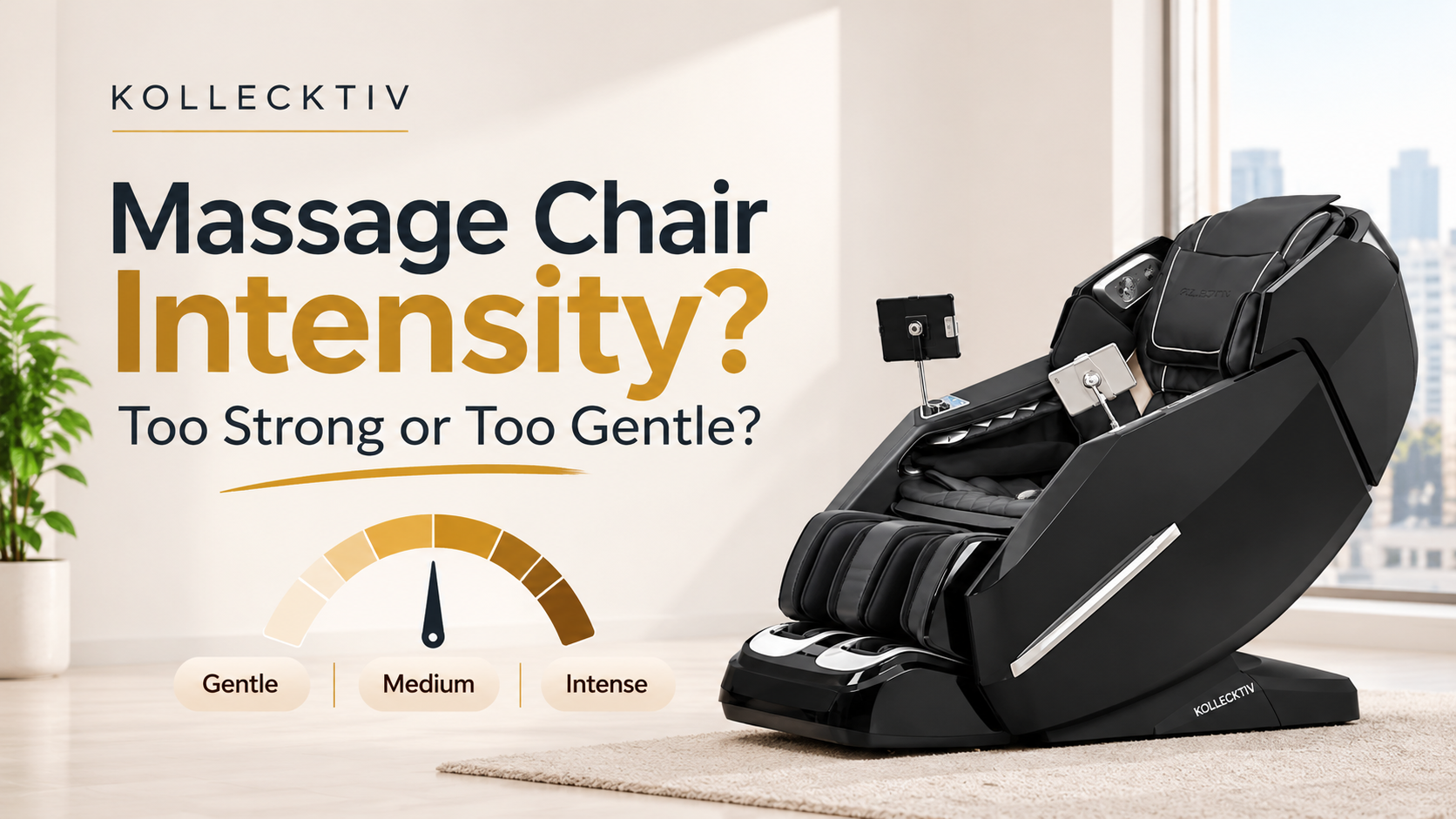
Quick Answer: Massage chair intensity depends on more than one dial. Roller strength, roller depth, airbag pressure, foot rollers, your sitting position and the recline angle all change how strong a massage feels. Start on the lowest settings, raise one control at a time, and sit fully back. If a chair still feels too strong, add a cushion or reduce the airbags.
Two people can sit in the same massage chair and come away with opposite verdicts: “barely felt it” and “way too much.” That’s not usually a fault in the chair. Intensity is a mix of hardware, settings and body position, and most owners only ever touch one or two of those controls.
This guide explains what controls massage chair intensity, what “soft,” “medium” and “intense” actually mean when you shop, and how to fix a chair that feels wrong. Examples come from Kollecktiv’s lineup of home massage chairs, as listed on November 16, 2026.
What Controls How Strong a Massage Chair Feels
Intensity isn’t a single setting. These are the parts that shape it, and what changing each one does.
Control
What it does
Effect on how strong it feels
Roller intensity level
Sets how hard the back rollers press
The biggest single change; usually 3 to 5 levels
Roller depth (3D)
Pushes the rollers further out of the backrest or pulls them in
More depth feels firmer and more focused
Roller speed and rhythm (4D)
Changes how fast and in what pattern the rollers move
Slow, deep movements often feel stronger than fast, light ones
Massage technique
Kneading, shiatsu-style pressing, tapping, rolling and so on
Kneading and pressing tend to feel stronger than rolling
Airbag (air cell) pressure
Sets how firmly air cells squeeze arms, hips, calves and feet
Often the part people find “too tight”
Foot and calf rollers
Rolling or kneading under the soles and calves
Can feel intense even when the back feels fine
Recline angle
Shifts more of your body weight onto the backrest
Deeper recline usually feels stronger
Sitting position and body scan
Where the rollers line up with your shoulders and back
Poor alignment can make pressure feel sharp in the wrong spot
Backrest cushion or pad
Adds a layer between you and the rollers
Softens everything
Heat
Warms the lumbar area, sometimes the calves
Doesn’t change pressure, but many people find it makes firm settings feel more comfortable
Owner’s manuals from established manufacturers give the same practical advice. Panasonic’s manual for its EP-MA70 chair, for example, says that leaning back into a deeper recline uses your body weight for a stronger massage. It also says a cloth or blanket between your back and the backrest softens the pressure, and that intensity should be raised one step at a time.
Soft, Medium or Intense: What the Labels Mean When You Shop
There’s no industry standard for these terms. They describe a chair’s overall character, meaning how firm its rollers and programs feel at typical settings, not a fixed number. Kollecktiv groups its chairs this way:
Kollecktiv’s site says all of its chairs have adjustable intensity. An “intense” chair can be turned down, and a “soft” chair can be turned up within its range. The label tells you where the chair’s range sits, which helps you choose.
If you…
You’ll probably prefer
Why
Are new to massage chairs, or prefer a light touch
Soft, or medium at low settings
A comfortable starting range, with less chance of feeling overwhelmed
Want a firm massage most days, but not every day
Medium
A middle range with room to go up or down
Regularly book firm, deep-pressure massages and know you like them
Intense
A range that reaches firmer pressure
Share the chair with someone who prefers the opposite
Medium, or a model with many adjustment levels
Each person can set their own levels
Intensity preference is personal. It isn’t a measure of how “effective” a massage is, and stronger isn’t automatically better.
Massage Chair Too Strong? Try These Steps in Order
Work through these from the top, changing one thing at a time so you know what helped.
Lower the roller intensity to its minimum. Many auto programs start in the middle of the range.
Reduce the roller depth if your chair has a 3D depth control.
Turn down the airbag pressure, or switch off airbags for the zone that feels tight, such as the arms or shoulders.
Lower the foot and calf roller level, or turn them off. The feet are often the most sensitive area, and many chairs adjust foot rollers separately.
Sit up a little. A shallower recline puts less of your body weight on the rollers.
Re-run the body scan while sitting fully back with your head on the pillow, so the rollers line up with your shoulders.
Switch from an auto program to manual mode and choose a gentler technique, such as rolling instead of kneading.
Add a layer. A folded towel or thin cushion between your back and the backrest softens the rollers. A towel over the calves or soles softens air cells. Several manufacturers’ manuals suggest exactly this.
Shorten the session. Start with a shorter program and build up.
If a chair still feels too strong on its lowest settings with a cushion, that’s useful to know early. Kollecktiv’s 40-day satisfaction window starts at delivery, and change-of-mind returns deduct freight, so test intensity in the first week.
Massage Chair Not Strong Enough? How to Get More Pressure
Raise the roller level one step at a time and give each step a few minutes.
Increase roller depth if available.
Recline further. Zero gravity and deeper recline positions put more body weight on the rollers.
Remove any backrest pad or cushion, if your chair has a removable one.
Choose a firmer technique in manual mode, or use a focus or spot setting on one area.
Check alignment. If the rollers miss your shoulders or back, the pressure lands on the wrong place and can feel weak. Sit fully back and re-scan.
If a chair is at its highest settings, fully reclined and properly aligned, and it still feels too gentle, it may simply sit at the soft end of the range. That’s what the shop-by-intensity labels help you avoid.
A Simple First-Week Routine
Days 1 to 2: use a short auto program at the lowest roller and airbag settings. Note which areas feel strongest.
Days 3 to 4: raise one control a step, such as the back rollers only. Keep foot rollers and airbags low.
Days 5 to 7: adjust the other zones one at a time, then save or note your preferred settings.
This also tells you, well inside the return window, whether the chair’s range suits you.
What to Check Before You Buy, If Intensity Matters to You
If you’re sensitive to pressure or want something firm, look for these on the product page, or ask support:
A massage should feel comfortable, not painful. Mayo Clinic notes you shouldn’t feel severe pain during a massage, though some soreness the next day is possible. Stop the chair if you feel sharp pain, numbness or tingling.
Mayo Clinic also advises talking with your healthcare team before massage if you:
have had a recent heart attack or blood clot
have a bleeding disorder or take blood thinners
have burns, broken bones or severe osteoporosis
are pregnant
Follow your chair’s manual for session length and safety warnings. Massage chairs are for relaxation and comfort, not medical treatment.
8. FAQ Section
What intensity should I use on a massage chair?
Start at the lowest roller and airbag settings, then raise one control at a time over several sessions. There’s no “right” level. Choose the one that feels firm but comfortable, never painful.
Why is my massage chair too strong?
Usually the auto program starts mid-range, the airbags or foot rollers are set high, or you’re reclined deeply. Lower each control, sit up slightly, re-run the body scan, or add a towel or cushion between you and the rollers.
How do I make a massage chair less intense?
Lower roller intensity and depth, reduce airbag pressure, turn down or switch off the foot rollers, and use a shallower recline. A folded towel on the backrest or over the calves softens pressure further.
How do I make a massage chair stronger?
Raise roller intensity and depth, recline further so more body weight rests on the rollers, remove any backrest pad, and choose a firmer technique or focus setting in manual mode.
What’s the difference between a soft and an intense massage chair?
The labels describe where a chair’s adjustable range sits. Soft chairs prioritize comfort at lighter pressure; intense chairs reach firmer, deeper pressure. Most chairs, including all of Kollecktiv’s, have adjustable intensity.
Should a massage chair hurt?
No. Mayo Clinic notes massage shouldn’t cause severe pain, though mild next-day soreness can happen. Stop if you feel sharp pain, numbness or tingling, and check with a healthcare provider if you have a medical condition.
Why do the foot rollers feel so intense?
The soles are sensitive, and foot rollers often have their own intensity setting. Lower or switch off the foot rollers, or wear thin socks or place a towel over the soles.
Ready to Choose by Feel?
Decide where you want your range to sit, check how many adjustment levels a model offers, and then compare Kollecktiv’s 4D massage chairs with adjustable roller depth and speed alongside the Soft, Medium and Intense groups. If a listing doesn’t say how many levels it has, ask support before you buy.