🔥 Black Friday Prices Now! 90-Day Price Match Guarantee.
✨ FREE White Glove Delivery - Only at Kollecktiv
🥇 America’s Top-Rated Massage Chair Brand
🎉Black Friday & Cyber Monday Sale - Limited Stocks!
🚚 Fast U.S. Shipping, arrives in 3+ days
🎁 No Sales Tax & 3 Year Warranty
🎖️ Exclusive Military Massage Chair Discount
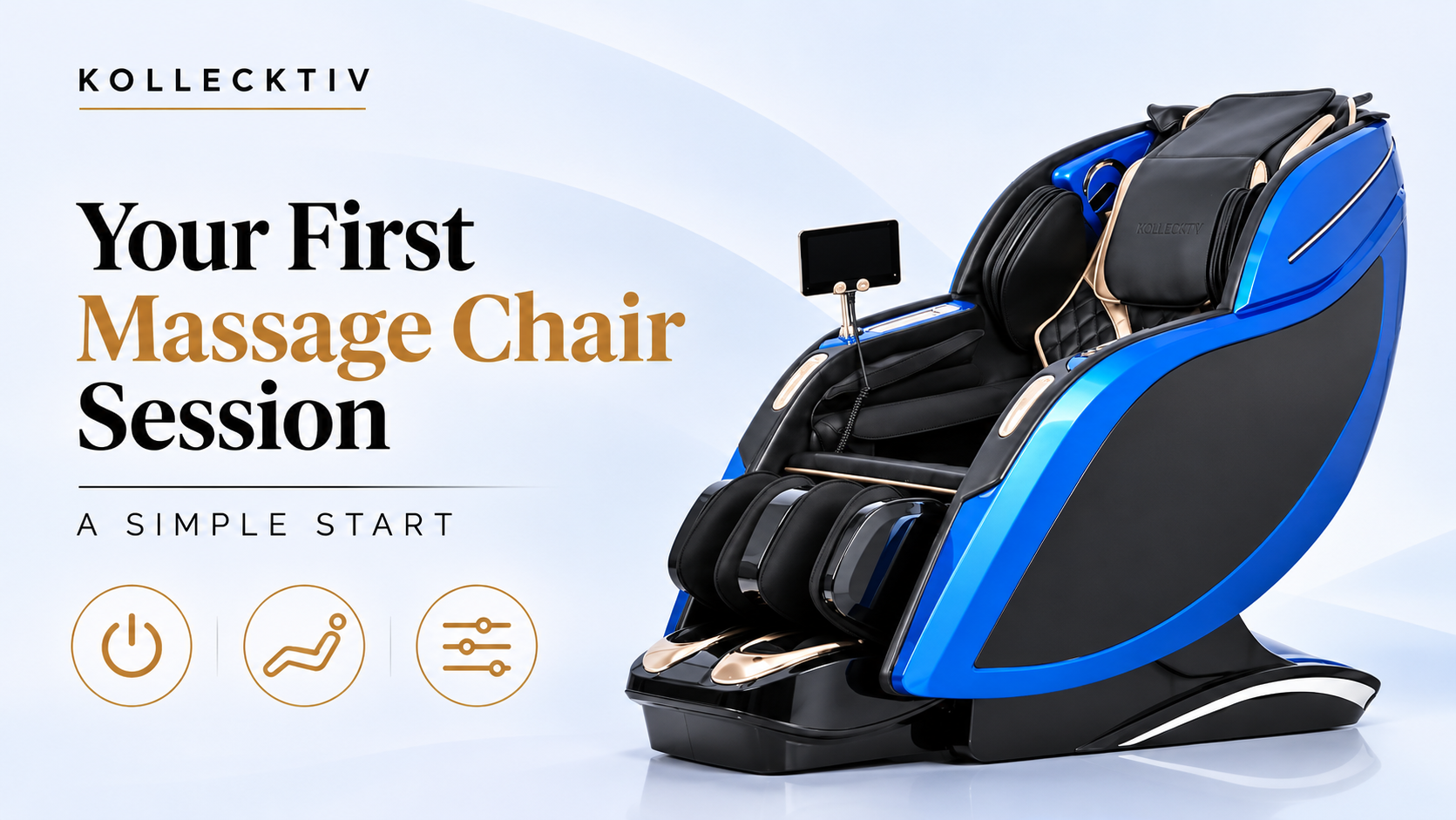
Expect a short body scan, then often a 15- to 20-minute automatic program that moves rollers along your back, squeezes airbags around your arms and legs, and may recline you. It can feel unfamiliar at first. Start with a gentle program at low intensity, sit fully back, and pause or lower the pressure anytime it feels too strong.
Why the first session feels different
A massage chair doesn’t feel like a massage therapist, and it doesn’t feel like a recliner either. Rollers travel up and down your back, airbags inflate around your arms, hips and calves, and the chair may tilt you back without warning if you haven’t used it before.
None of that is a problem, but it helps to know what’s coming. This guide walks through a first session from start to finish: what to do before you sit down, what happens once the program starts, how to adjust it, and what to notice afterward.
One thing to keep in mind throughout: chairs differ. Buttons, program names, scan behavior and adjustment options vary by brand and model, so treat this as a general guide and keep your owner’s manual nearby.
Before your first session
Get to know the controls
Spend five minutes with the remote before you sit down. Most remotes or controllers group their buttons into a few areas:
Power and pause: start, pause and stop.
Programs: preset automatic sessions, often with names like “relax,” “full body” or “stretch.”
Intensity: roller strength, and often a separate airbag strength.
Position: backrest, leg rest and zero gravity recline.
Manual settings: choosing a specific technique, speed or body area.
Some chairs use a touchscreen; others add a shortcut panel on the armrest or voice commands. Find the pause or stop control first, so you know how to end the session if you need to.
Pick a gentle starting program
For a first session, an automatic program is usually the easiest start. The chair handles sequencing and timing, so you can focus on how it feels. Choose one labeled for relaxation or full-body use rather than a deep-tissue or stretch program, and set intensity at or near the lowest level. Inada’s manual puts it simply: start off with a lighter massage.
Dress for comfort
Wear soft, comfortable clothing, but not anything bulky that changes how the rollers feel.
Empty your pockets. One manual specifically warns not to keep hard objects in your pockets during hip and seat massage. The same manual advises against wearing hair ornaments.
Take off shoes for the foot massage, and remove jewelry such as bracelets if arm airbags will squeeze your wrists.
Prepare the space
Make sure the chair is plugged in, switched on at the main power switch (often near the base) and clear of walls and furniture so it can recline. Keep pets and kids out of the leg rest’s path. If the chair just arrived, here’s help with getting the chair set up after delivery.
Getting started: what happens step by step
Sit all the way back. Your back and shoulders should rest against the backrest and your head on the pillow, not leaning forward. Furniture for Life recommends letting your back, shoulders, neck and head sit comfortably against the chair.
Place your arms and feet. Slide your arms into the arm compartments, if your chair has them, and your feet into the foot wells. If your feet don’t reach or don’t fit, adjust the leg rest rather than forcing them.
Start the program. The chair may recline slightly and raise the leg rest into a ready position.
Let the body scan finish. Many chairs run a scan first. The rollers travel up your back to find your shoulders. Stay still and don’t press other buttons. Some chairs then give you a few seconds to nudge the shoulder position up or down.
The massage begins. Rollers start working your back, and airbags start cycling. Depending on the program, the chair may recline further or move into zero gravity, with your legs raised.
The timer counts down. Many programs end automatically. At the end, rollers return to a resting position and the chair usually returns upright.
Understanding the experience
What does each part feel like?
Part
What you’ll likely feel
Rollers (kneading)
Circular pressing, like knuckles working in small circles
Rollers (rolling)
Firm pressure gliding up and down along your spine
Rollers (tapping)
Quick, rhythmic taps, often with a clicking sound
Airbags (air compression)
A gradual squeeze, then release, around your arms, hips, calves or feet
Foot rollers
Pressure under your soles; firmer than many people expect
Recline / zero gravity
Tilting back with your legs lifting; can feel like floating the first time
Heat (if available)
Gentle warmth, usually at the lower back or calves
The first time, airbags tend to surprise people most, because the squeeze can feel firm. That’s normal. It should feel snug, not painful.
How do you adjust intensity?
Most chairs have separate controls for roller and airbag strength. Kollecktiv’s own guidance notes that most current chairs offer five levels for each. Lower them one step at a time. If your chair offers both, try reducing airbags first if the squeeze feels like too much, and rollers if your back feels too much pressure.
Pause usually freezes the massage in place. On some chairs, airbags deflate but the rollers stay where they are, so you can resume.
Stop or power off usually ends the session, returns the rollers to their resting position and brings the chair upright.
Switching programs mid-session may restart the body scan on some chairs.
Changing settings mid-session, such as intensity, speed or recline, usually works without stopping.
Check your manual for exact behavior, because it varies.
After the first session
What you might notice
Many people feel relaxed or loose. Some feel mild soreness, especially if the rollers felt firm. That’s similar to how a new type of exercise can feel unfamiliar. Pain that’s sharp, lasts or worsens is different, so stop using the chair and check with a healthcare provider if that happens. If you have a medical condition, are pregnant or have concerns, ask your doctor before regular use and review these basic safety tips for Kollecktiv chairs.
Quick after-session review
Ask yourself:
Was the pressure comfortable, too light or too firm?
Did the rollers land in the right places, especially your shoulders?
How did the airbags feel on your arms and legs?
Was the foot massage comfortable?
Was the session length about right?
Did you like the recline or zero gravity position?
Your answers tell you what to change next time: lower or raise intensity, rescan, switch programs or shorten the session.
Kollecktiv’s chairs come mostly assembled, so after you attach the control panel you can start right away. Kollecktiv’s homepage notes that most of its automatic programs run 15 to 20 minutes, and it suggests 2 to 3 sessions per week to start. Control options vary by model. Kollecktiv describes voice control and shortcut panels as available across its range, and the G18 uses a screen controller. To see the controls and features on each model, compare Kollecktiv’s massage chairs by model.
The bottom line
Your first session is mostly about learning: how the chair moves, what each part feels like and which settings suit you. Learn the pause button first, start gentle, sit fully back and let the scan finish. Adjust as you go. After a week of short sessions, you’ll know your favorite programs and settings.
Frequently asked questions
Should a beginner start with an automatic program?
Usually, yes. Automatic programs handle timing and sequencing, so you can focus on how the massage feels. Choose a gentle or relaxation program at low intensity.
How do you adjust massage intensity?
Use the intensity buttons on the remote or touchscreen. Many chairs have separate settings for rollers and airbags, so adjust each one.
What if the rollers feel too strong?
Lower the roller intensity, adjust your position or recline, or use a back pad if your chair has one. Stop if it hurts.
Do all massage chairs work the same way?
No. Controls, programs, body scanning and adjustment options vary by brand and model. Your owner’s manual is the best guide.
Can you change settings during a session?
On most chairs, yes. Intensity, speed and recline can usually be changed mid-session. Switching programs may restart the scan on some models.
Is it normal to feel sore after the first session?
Mild soreness can happen when your body isn’t used to the pressure. Sharp, lasting or worsening pain isn’t normal. Stop and consult a healthcare provider.